

ALL IS oNE - Gateway ZX
The best selling All-in-One PC in 2010 at BestBuy, with over 1 million units sold in the USA at the first year.
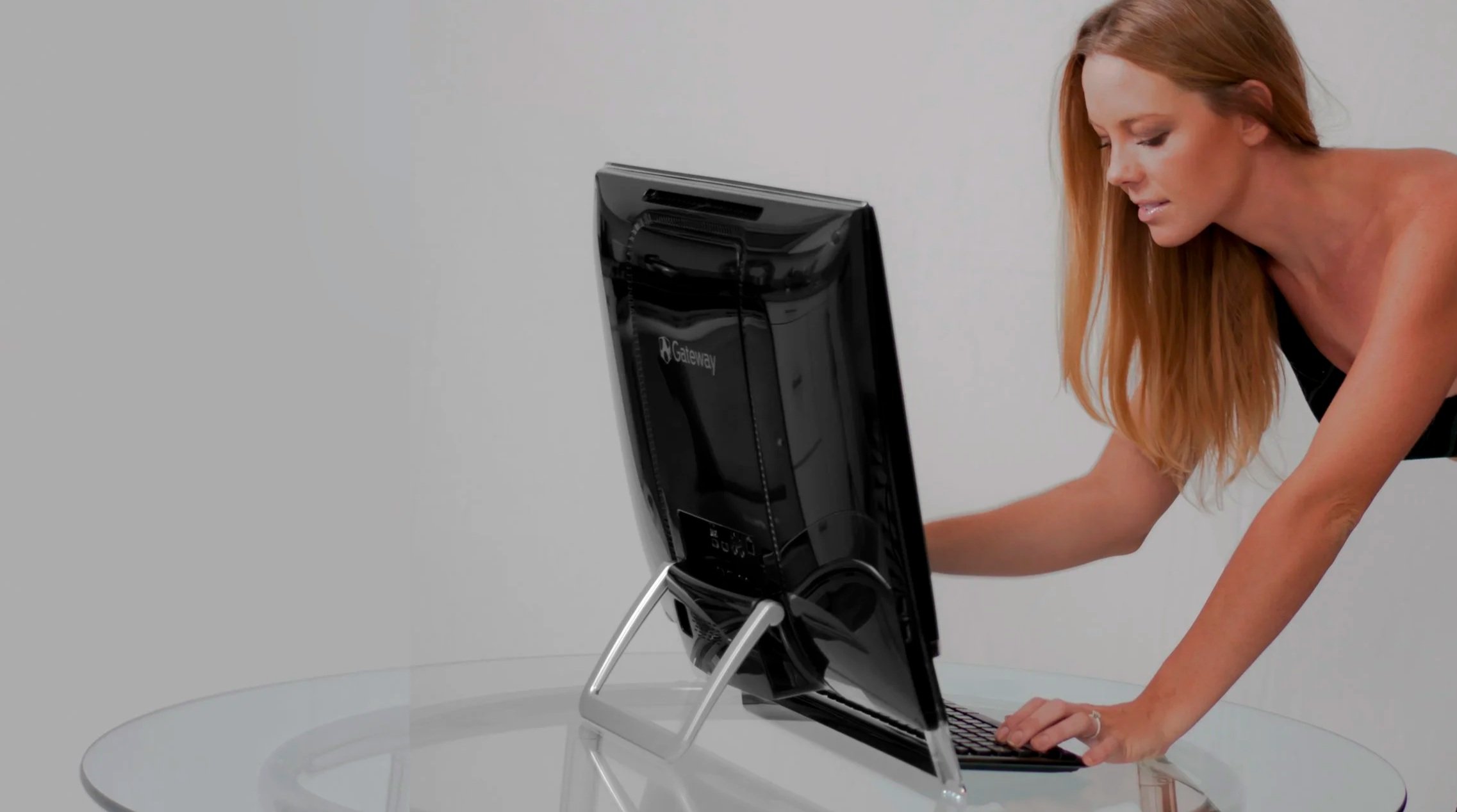
ALL IS ONE
Gateway ZX All-in-One
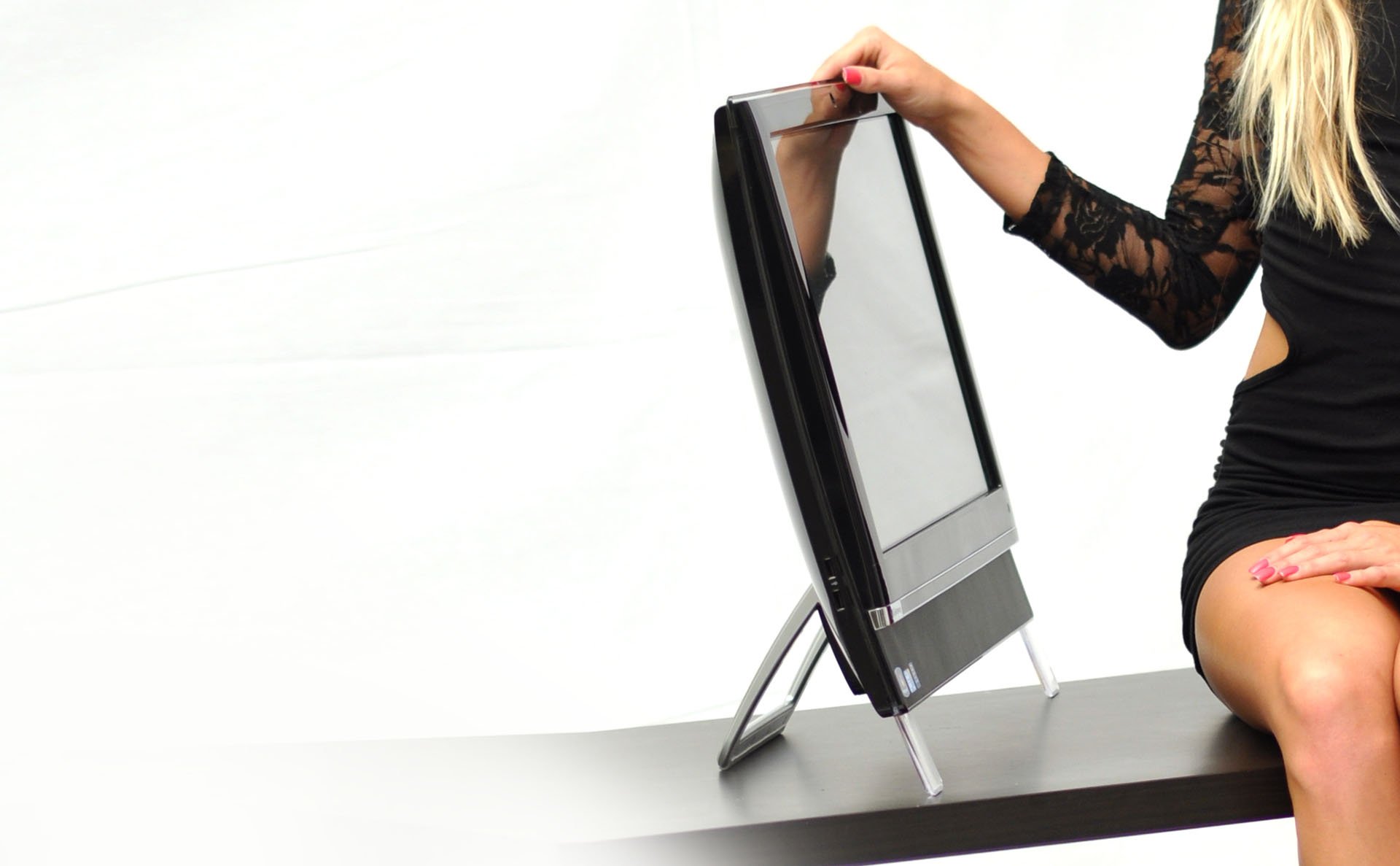
Monolithic design
The Gateway ZX can sit on your desk, on your coffee table, in your kitchen… It fits perfectly anywhere in your house.
You can look it from any angle, every angle is a good angle…
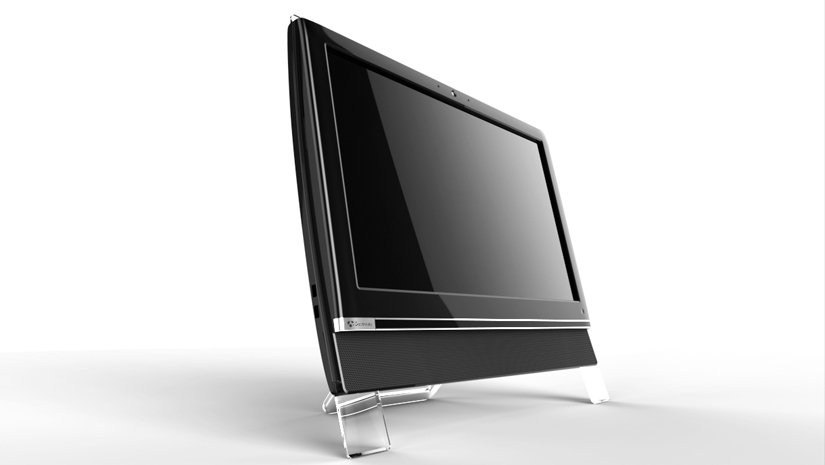
Self levitating
The ZX is supported by two clear polycarbonate stands that appear almost invisible from a distance.
The supporting pieces are very thin at the edges and gradually thicken toward the back, creating rich light reflections and enhancing the product’s floating, levitating appearance.

Pure essense
To establish a strong first impression, the shape must be pure and memorable. The goal in achieving this purity is to develop a form that can be sketched out using as few lines as possible.
The product looks clean and smooth at every angle. It can be placed anywhere in the house, without looking out of the place.
The Gateway ZX is as elegant as your favorite mid-century modern leather chair — a design meant to feel timeless, harmonious in the home, and effortlessly integrated into daily life.
the story
The ZX series was the last product Michael Hong designed at Gateway Computers before he left to start Tandem.
In early 2009, Gateway asked him to take the lead designing the 1st LCD All-in-One for Gateway.
When the Gateway ZX series launched at 2010, the desktop market was undergoing structural change:
Laptops were rapidly overtaking towers for home use
Desktops were perceived as bulky and outdated
Design had become a differentiator, not just specs
At the time, the all-in-one category was strongly associated with the iMac, which had redefined desktop aesthetics with minimalism, thin profiles, and integrated displays. Windows PCs had to respond — but in a way that fit their pricing and ecosystem realities.
A shape You Could define with a Few Lines
In 2009, working as a lead designer at Gateway Computers, Michael Hong was asked to rethink the desktop.
Michael chose to begin differently.
The initial concept for what became the ZX series was sketched in roughly one hour. His objective was clear: create a form so distinctive and memorable that it could be drawn in just a few lines. If the silhouette is recognizable, the product has identity.
The inspiration did not come from another computer. It came from mid-century modern furniture — particularly the Barcelona Chair. Years earlier at Rochester Institute of Technology, Michael took a Furniture Design History class with Professor Craig McArt, formerly of the Xerox Design Center. That experience shaped how he viewed objects in space.
A chair has posture.
It has presence.
It meets the body in a deeply human way.
It lives alongside people, every day.
Michael approached the ZX the same way — not as a machine, but as an object in the home. The intent is so the user can place it anywhere in the home, instead of on a computer desk. The stance, the curvature, and the relationship between the display and its base were composed more like modern furniture than conventional computer hardware.
Unlike many industrial designers, who typically wrap a surface design around a predetermined internal layout, Michael challenged the process by coordinating the industrial design alongside the electrical engineering layout, allowing form and function to evolve together.
Instead of designing from the outside in, he started with the internal components and worked outward to achieve the streamlined form. He started with the internal architecture — repositioning the hard drive, power supply, and memory modules — and let the exterior form flow from the functional core, creating a truly streamlined and integrated design. During the design implementation phase, Michael worked closely with the Gateway and OEM engineering teams, repositioning key components — including the hard drive, internal power supply, and the mounting orientation of the memory modules on the PCB — to achieve the streamlined form.
It quickly became a runaway success: in its first year following launch, more than one million ZX units were sold, accounting for 25% of Gateway’s total revenue in 2010.
Looking back, what defines the project is not the specification sheet, but its clarity of intent: a one-hour sketch, influenced by a strong vision, translated into a product that entered homes across the country.
Industrial Design as Competitive Strategy
The industrial design of the ZX series was central to its market role.
Key design themes included:
• Thin, integrated silhouette
The slimming of the chassis and the unification of display + computing components reduced perceived bulk and modernized the desktop form factor.
• Living-room readiness
With TV tuner options and large 23" displays, the product blurred the boundary between PC and home entertainment device.
In effect, Gateway was competing not only against other PCs — but against the idea that desktops were obsolete.
Strategic Positioning: Premium Feel with powerful ID
Gateway’s ZX6 series was a deliberate move to:
Deliver a design-forward Windows alternative
Compete visually with premium AIOs
Mainstream price while maintaining aspirational appeal
Unlike beige towers that had defined Gateway in the 1990s, the ZX line signaled a shift toward modern consumer electronics design language — closer to flat-panel TVs than traditional PCs.